If there is one thing that keeps farm owners awake at night, it isn’t the price of feed or even market fluctuations. It’s the “silent killer”: Dissolved Oxygen (DO).
When DO levels drop, your investment can vanish in hours. But when you look for solutions, you’re often met with a confusing choice: do you just need better aeration, or is it time to invest in an oxygen generator?
Most people use these terms interchangeably. That is a mistake that costs money. One moves air; the other manufactures a life-support gas. Choosing the wrong one for your specific stocking density is like trying to put out a forest fire with a garden hose—or conversely, using a fire hydrant to water a single potted plant.
In this guide, I’m going to break down the technical and financial differences between aeration and oxygen generation so you can stop guessing and start growing.
What Is the Difference Between Aeration and Oxygen Generators in Aquaculture?
The fundamental difference lies in oxygen concentration and transfer efficiency. Aeration uses mechanical means (like paddlewheels or diffusers) to mix atmospheric air (which is only 21% oxygen) into the water. An oxygen generator uses Pressure Swing Adsorption (PSA) technology to produce 90-95% pure oxygen, allowing for significantly higher dissolved oxygen levels and supporting much higher fish stocking densities that aeration alone cannot sustain.
The Hard Reality of Dissolved Oxygen (DO)
Before we look at the machines, we have to look at the biology. Water has a “saturation point.” At a certain temperature, water can only hold so much oxygen from the air.
If you are using standard aeration, you are fighting a battle of diminishing returns. Since air only contains 21% oxygen, the “pressure” pushing that oxygen into the water is relatively low. Once your water reaches 70-80% saturation, getting it any higher with just a paddlewheel is like trying to blow more air into an already inflated balloon.
Oxygen generators change the physics of the pond. By using 93% pure oxygen, you increase the partial pressure of the gas. This allows you to achieve “super-saturation”—levels of DO that are literally impossible to reach with standard air.
Section 1: Aeration – The Reliable Workhorse
When I talk to farmers starting with large, open-air ponds, I almost always point them toward aeration first.
How It Works
Aeration is all about surface area. Whether you’re using a paddlewheel, a vertical pump, or a venturi injector, the goal is to splash the water into the air or bubble air through the water. This facilitates gas exchange: oxygen goes in, and harmful carbon dioxide (CO2) goes out.
The Pros
- CO2 Stripping: This is the “secret” benefit. Air movement helps “strip” toxic CO2 from the water. Oxygen generators don’t do this as effectively on their own.
- Lower CAPEX: A paddlewheel aerator is significantly cheaper upfront than a PSA oxygen plant.
- Simplicity: If a paddlewheel breaks, a local mechanic can usually fix it.
The Cons
- The Ceiling: You can’t support high-density populations. If you try to double your fish count using only aeration, you’ll likely hit a wall where the electricity cost of running 20 aerators outweighs the profit of the fish.
- Weather Dependent: On a hot, humid night, aeration becomes drastically less efficient because warm water holds less gas.
Section 2: Oxygen Generators – The High-Performance Engine
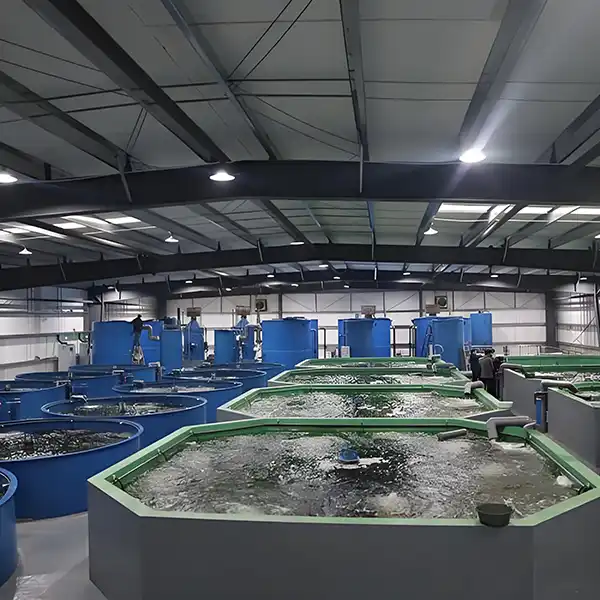
If you are moving toward RAS (Recirculating Aquaculture Systems) or high-density tanks, aeration is no longer an option—it’s a liability. You need an oxygen generator.
The PSA Technology (Pressure Swing Adsorption)
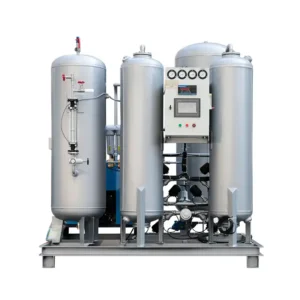
I often see clients confused by how these “make” oxygen. They don’t use chemicals. They use a molecular sieve (usually Zeolite). The machine pulls in ambient air, compresses it, and runs it through the sieve. The Zeolite grabs the nitrogen and lets the oxygen pass through. Then, it “swings” the pressure to release the nitrogen and start again.
Why It’s a Game Changer for ROI
Based on my experience auditing farm financials, the transition to pure oxygen is where “farmers” become “industrialists.”
- Increased Stocking Density: With pure oxygen, you can often triple the amount of fish in the same volume of water compared to aeration.
- Better Feed Conversion Ratio (FCR): Fish don’t eat well when they are breathless. Keeping DO levels stable at 100% saturation means fish metabolize feed more efficiently. You spend less on feed and get faster growth.
The Critical “Safety Factor”
Pure oxygen is a powerful tool, but it requires respect. I’ve seen installations where leaks created fire hazards. You need high-quality flow meters and low-pressure alarms. Unlike air, you can actually “over-oxygenate” water, leading to “gas bubble disease” in fish.
Comparison at a Glance: Aeration vs. Oxygen Generation
| Feature | Mechanical Aeration | Oxygen Generator (PSA) |
|---|---|---|
| Oxygen Concentration | ~21% (Ambient Air) | 90% – 95% (Pure O2) |
| Best For | Low-density ponds, large lakes | High-density tanks, RAS, Hatcheries |
| Primary Benefit | Cheap, CO2 stripping | Maximum stocking density, rapid growth |
| Operating Cost | High electricity per kg of O2 | Lower electricity per kg of O2 |
| Maintenance | Mechanical/Bearings | Compressor/Filter/Zeolite Sieve |
| Water Depth Requirement | Works best in shallow water | Requires depth or “cones” for dissolution |
Section 3: When Should You Switch? (The Decision Matrix)
I often see clients making the mistake of sticking with aeration for too long because they fear the “complexity” of an oxygen generator. Conversely, some buy a generator when a few well-placed diffusers would have solved the problem.
You need Aeration if:
- Your stocking density is low to moderate (e.g., traditional earthen ponds).
- Your primary goal is water circulation and preventing thermal stratification.
- Your budget is limited to immediate, lower-cost equipment.
- You are farming species that are hardy and have lower metabolic oxygen demands (like certain types of carp).
You need an Oxygen Generator if:
- You are running an RAS (Recirculating Aquaculture System). Air-based aeration simply cannot keep up with the biological oxygen demand (BOD) of a closed system.
- You are farming high-value, sensitive species (Salmon, Trout, Shrimp).
- You want to reduce your “Days to Market.” High DO levels shorten the growth cycle.
- You have limited space and must maximize the “output per cubic meter.”
Section 4: The “Pro Engineer” Approach to Installation
If you decide to go with an oxygen generator, don’t just “bubble” the pure oxygen into the water. That’s like throwing money into the wind.
Use an Oxygen Cone (Speece Cone)
To get the most out of your generator, you need an oxygen cone. It uses pressure to force the pure oxygen to dissolve into the water with almost 100% efficiency. I’ve seen farms save 30% on their energy bills just by switching from simple diffusers to a pressurized cone system.
Integration with Monitoring
In 2026, if you aren’t using an automated DO probe linked to your generator’s PLC (Programmable Logic Controller), you are leaving money on the table. The system should automatically ramp up oxygen production at 2:00 AM when fish respiration is at its peak and dial it back during the day.
Section 5: Safety & Maintenance SOP (Standard Operating Procedure)
Safety is where most “introductory guides” fail you. Dealing with 95% pure oxygen isn’t the same as dealing with a leaf blower.
- Oil-Free is Mandatory: Never use standard lubricants near your oxygen lines. Pure oxygen reacts violently with hydrocarbons (oil/grease) and can cause spontaneous combustion. Always use oxygen-compatible lubricants.
- Ventilation: The “waste” gas from a PSA generator is nitrogen-rich. Ensure your equipment room is well-ventilated so you don’t create an oxygen-deficient environment for your workers.
- Sieve Health: The Zeolite in your generator hates moisture. If your air dryer fails, your Zeolite will be ruined within weeks. Check your dryer daily. It’s the heart of your oxygen purity.
FAQ
Q: Can I use both together?
A: Absolutely. In fact, many top-tier farms use paddlewheels for circulation and CO2 stripping, while injecting pure oxygen to maintain high DO levels. It’s a “belt and suspenders” approach that works brilliantly.
Q: Is an oxygen generator louder than an aerator?
A: Generally, yes. The air compressor and the “purging” sound of the nitrogen release in a PSA system can be noisy. If your farm is near a residential area, you’ll want to house the generator in a sound-dampened shed.
Q: How long does an oxygen generator last?
A: A well-maintained PSA system can last 10-15 years. The compressor will need servicing every few thousand hours, and the Zeolite might need replacement after 5-7 years if the air quality is poor.
Q: Does temperature affect my choice?
A: Yes. The hotter the water, the less oxygen it can hold. If you are in a tropical climate and trying to maintain high densities, you almost certainly need an oxygen generator because the “physics” of air aeration will fail you in the heat.
The Bottom Line: Which One Is Your Profit Driver?
If you are a B2B buyer looking for a sustainable, long-term ROI, you have to look past the initial price tag.
Aeration is about survival. It keeps the water “alive” and prevents total disaster in low-density environments. It is a cost of doing business.
Oxygen Generation is about optimization. It is a tool for those who want to treat aquaculture like a high-precision manufacturing process. It allows you to control the most critical variable in your “factory”—the breath of your livestock.
My Recommendation: If you are currently hitting a “ceiling” where your fish growth has plateaued despite perfect feeding, or if you are planning a new RAS facility, stop looking at bigger aerators. You don’t need more air; you need better air.
Next Steps: Before you buy, perform a DO Load Calculation. Map out your maximum expected biomass (total weight of fish) and the water temperature. If your calculated oxygen demand exceeds what 21% air can provide at 60% efficiency, it’s time to call an oxygen specialist.
Ready to scale your production? Our team specializes in custom PSA oxygen solutions designed specifically for the rigors of the aquaculture environment. [Contact our engineers today for a custom system sizing and ROI projection].