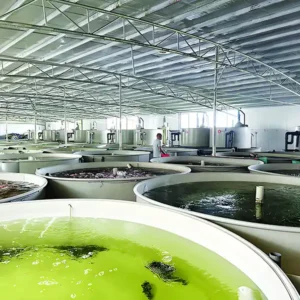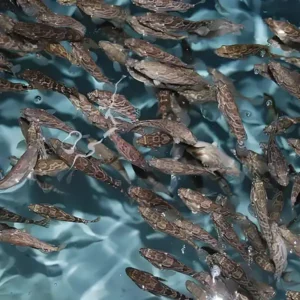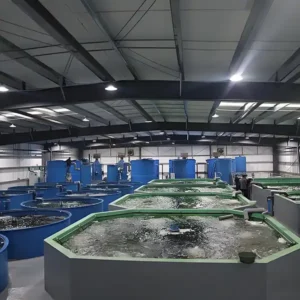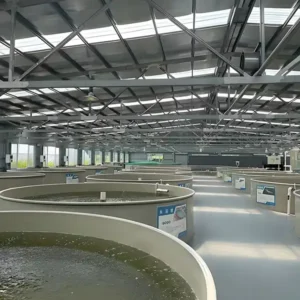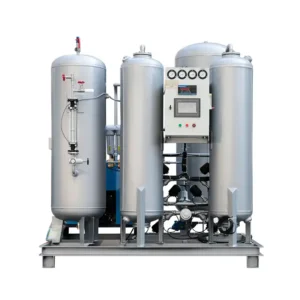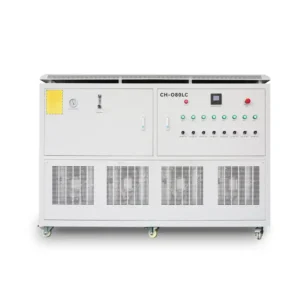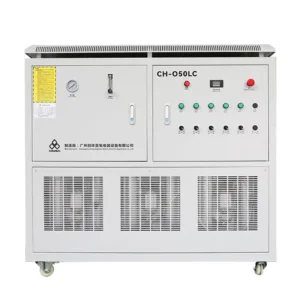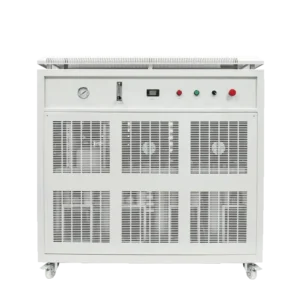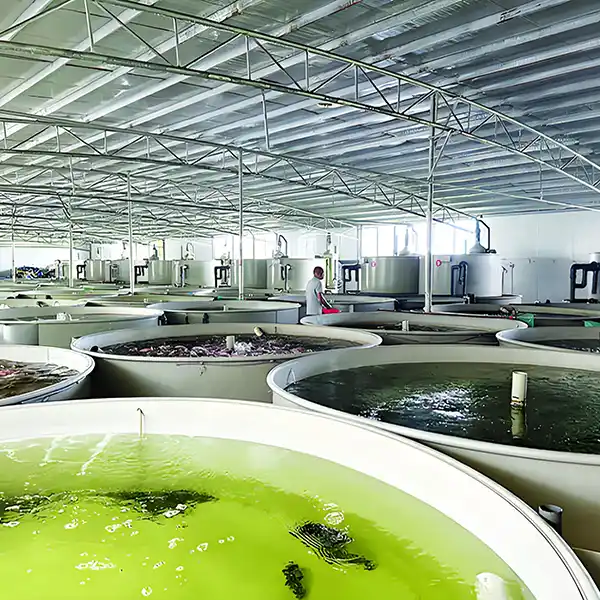
The best oxygen diffusers for Recirculating Aquaculture Systems (RAS) are Micro-Pore Ceramic Plate Diffusers and Fine-Pore EPDM Disc Diffusers. For high-density systems requiring pure oxygen, Oxygen Cones (Speece Cones) or Venturi Injectors are the most efficient tools to achieve supersaturation. Ceramic plates offer the highest Standard Oxygen Transfer Efficiency (SOTE) for fine-tuning, while EPDM discs provide the best balance of durability and cost-effectiveness for large-scale tanks.
The Critical Role of Oxygen in RAS
In a Recirculating Aquaculture System (RAS), oxygen is your most expensive limiting factor. It is not just about keeping fish alive. It is about maximizing the feed conversion ratio (FCR). If your Dissolved Oxygen (DO) levels drop even slightly below the optimal threshold for your species, fish stop eating. Their metabolism slows down. Ammonia levels spike because the biofilter’s nitrifying bacteria also demand massive amounts of oxygen to function.
Traditional aeration, like paddlewheels or simple air stones, fails in RAS. You need precision. You need tiny bubbles.
Understanding Oxygen Transfer Efficiency (SOTE)
Oxygen does not like to stay in water. To get it there, you must fight physics. The efficiency of a diffuser is measured by SOTE—how much of the oxygen you pump into the system actually dissolves versus how much floats to the surface and escapes.
Small bubbles are the key. A bubble with a 1mm diameter has much more surface area relative to its volume than a 10mm bubble. Smaller bubbles also rise slower. This gives the oxygen more “hang time” to transfer into the water column. In a 3-meter deep tank, a high-quality ceramic diffuser can achieve a SOTE of over 15% per meter of depth when using air, and significantly higher when using pure oxygen.
1. Ceramic Plate Diffusers: The Precision Tool
Ceramic diffusers are the gold standard for RAS hatcheries and high-value grow-out tanks. These plates are manufactured by firing aluminum oxide at high temperatures to create a rigid, porous structure.
The Benefits:
- Uniform Bubble Size: They produce bubbles between 100 and 500 microns. This creates a “cloud” of oxygen rather than a stream of bubbles.
- Flat Profile: The flat shape prevents the bubbles from coalescing (merging) as they leave the surface.
- Durability: They do not degrade in ozone or high-salinity environments.
The Trade-offs:
- Pressure Requirements: Ceramic is dense. You need a high-pressure blower or oxygen regulator to “crack” the plate and start the flow.
- Fragility: They can crack if dropped.
- Maintenance: Over time, minerals and bio-deposits can clog the pores. You must be prepared for occasional acid bathing to restore performance.
2. EPDM and Silicone Disc Diffusers: The Industrial Workhorse
If you are managing large grow-out tanks with thousands of kilograms of biomass, you need volume. EPDM (Ethylene Propylene Diene Monomer) membrane diffusers are designed for this.
The membrane has thousands of tiny I-shaped slits. When air or oxygen pressure is applied, the membrane expands and the slits open, releasing bubbles. When the pressure stops, the membrane collapses, sealing the slits and preventing water from backing up into the lines.
Why Use Them in RAS?
- Self-Cleaning: The flexing action of the membrane sheds biofilm. This is critical in RAS where organic loading is high.
- Low Cost: They are significantly cheaper than ceramic plates for large-scale installations.
- Ozone Resistance: If you use ozone for water clarity, choose Silicone membranes over EPDM. Silicone survives ozone exposure without becoming brittle.
3. Nano-Bubble Tubing: Maximum Surface Area
Nano-bubble tubing (often called “Aero-Tube”) is a specialized porous hose. It is flexible and can be wrapped around the bottom of a circular tank to ensure there are no “dead zones” where oxygen is low.
This tubing is ideal for Biofloc systems or RAS tanks with high solids. The large surface area of the hose allows for high volumes of oxygen delivery at relatively low pressures. However, it requires more frequent cleaning than disc diffusers because the soft material is a magnet for algae and bacterial growth.
4. Beyond Diffusers: Oxygen Cones and Venturi Injectors
In intensive RAS, sometimes diffusers aren’t enough. When you are stocking tilapia or salmon at 80kg to 100kg per cubic meter, you need to reach 150% or 200% oxygen saturation. Diffusers struggle to do this because the bubbles escape before they can dissolve.
Oxygen Cones (Speece Cones): You pump water into the top of a cone-shaped vessel while injecting pure oxygen. As the water moves down, the cone widens, and the water velocity decreases. The bubbles are trapped in the downward flow until they dissolve completely. The efficiency is nearly 100%.
Venturi Injectors: These use the Mazzei principle. Water is forced through a constricted section of pipe. This creates a vacuum that sucks in pure oxygen and shears it into the water at high velocity. It is a compact, mechanical way to saturate water before it even enters the fish tank.
Calculating Your Needs: The Reality of Consumption
Do not guess how many diffusers you need. Use the math. In a warm-water RAS (e.g., Tilapia at 28°C), the fish might consume 300 to 500 grams of oxygen for every kilogram of feed given.
If you feed 100kg of pellets a day, your fish need up to 50kg of oxygen. But the bacteria in your biofilter will consume another 15kg to 20kg to process the ammonia. If your diffuser is only 30% efficient, you must supply over 200kg of oxygen to ensure 70kg actually dissolves. High-efficiency diffusers pay for themselves by reducing the amount of oxygen you waste.
The Impact of Depth and Temperature
Oxygen solubility decreases as temperature rises. In a cold-water trout RAS (12°C), water holds oxygen easily. In a shrimp RAS (30°C), the water holds very little.
Depth also matters. Every meter of depth increases the partial pressure of the oxygen. This forces the gas into the liquid faster. If your tanks are shallow (less than 1.5 meters), diffusers are less efficient. In shallow systems, you should prioritize Oxygen Cones or longer runs of nano-bubble tubing to increase contact time.
Maintenance: The Secret to Top-3 Performance
A clogged diffuser is a liability. In RAS, a thick layer of “biofouling” (bacteria and slime) will coat your diffusers within weeks. This increases backpressure on your blowers, raising your electricity bill and lowering your DO levels.
- Monitor Backpressure: Install a pressure gauge on your air manifold. If the pressure rises, your diffusers are clogging.
- Regular Cleaning: For ceramic plates, a 10% hydrochloric acid soak usually clears mineral deposits. For EPDM, a simple scrub with a soft brush often suffices.
- Purge Regularly: If using membrane diffusers, briefly increase the airflow to “pop” the membranes and shed debris.
Selection Guide by System Type
- Hatchery/Nursery: Use Ceramic Plates. The bubbles are gentle and won’t physically damage delicate fry or larvae.
- Commercial Grow-out (Circular Tanks): Use EPDM Disc Diffusers at the center or Nano-bubble tubing around the perimeter to aid in the “centrifuge” effect for waste removal.
- High-Density Pure Oxygen Systems: Use Oxygen Cones as the primary saturation method, with Ceramic Plates as an emergency backup.
Summary
Choosing the best oxygen diffuser is an exercise in balancing your Specific Oxygen Transfer Efficiency against your operational budget. For the highest precision and SOTE, ceramic is the winner. For rugged, large-scale reliability, EPDM discs are the industry standard.
In a modern RAS environment, the goal is total control. Every milligram of dissolved oxygen correlates to a milligram of growth. Don’t let poor diffusion be the bottleneck in your production. Invest in high-surface-area, fine-pore technology to ensure your feed—and your profits—don’t go to waste.